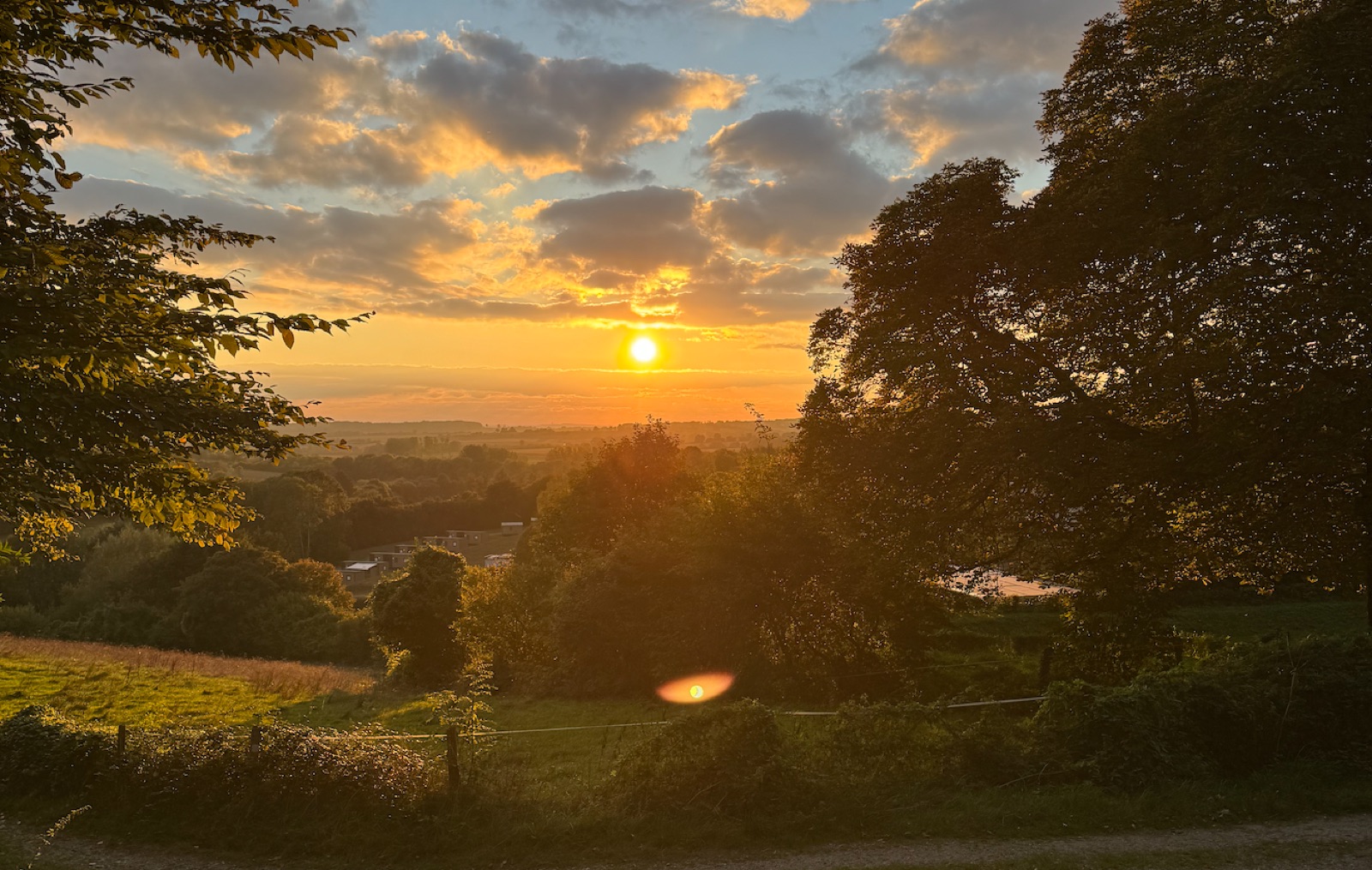
Le Perche is walking country before it is anything else. The hills are soft, the forests are old, the paths are marked, and the roads between them are empty enough to let you hear yourself. You do not need to be a hiker to enjoy this region on foot. You need an hour, a pair of boots, and a rough idea of where to start.
These are the five walks we come back to. One for a morning with kids, one for a slow half-day under beech trees, one for a flat afternoon with a picnic, one for silence, and one for the view. Pick according to the weather, the company, and how much of the day you want to spend.
1. Etang de la Herse: the classic half-day
The pond at La Herse sits deep in the Foret de Belleme, surrounded by 2,400 hectares of oak and beech managed since the seventeenth century. The loop around the water and through the surrounding woods is the walk most locals would send you on first, and for good reason. It is long enough to feel like a walk, short enough to finish by lunch, and pretty in any weather.
Start at the lakeside car park off the D938. The waymarked loop around the pond is a gentle two kilometres on its own. To make a morning of it, follow the blue or yellow markers into the forest north of the water. Paths crisscross the woods and most of them eventually lead back to the car park. You can stretch this to a full six or seven kilometres without trying.
The light in the beech stands is the point. Spring green, summer shade, autumn copper, and in winter the bare trunks line up like organ pipes. Bring a thermos in the cold months and you will not regret it.
Practical: 2 km short loop, 6 to 7 km with forest extension. Flat to gently rolling. Allow 45 minutes to 2.5 hours. Parking free at the etang. Dog-friendly. Best in any season; muddy boots required from October to March.
2. Chene de l'Ecole and Pierre Procureuse: the short one with kids
If you have ninety minutes and small legs to entertain, this is the walk. Two of the most interesting things in the Foret de Belleme are within a short distance of each other, and the loop that links them is flat, clearly signposted, and exactly the right length for a first walk with children.
The Chene de l'Ecole is a monumental oak, one of the oldest trees in the forest and large enough that adults feel small at the base of it. From there, a waymarked trail leads to the Pierre Procureuse, a Neolithic standing stone buried in the understory. Nobody knows exactly what it meant to the people who put it there, which is half the charm. Bring a torch if you want to inspect the underside.
Both sites sit inside the forest a few kilometres north of Belleme. Park at the forestry signboards and follow the wooden posts. Come home through the beech for the full effect.
Practical: 3 to 4 km loop. Flat. Allow 60 to 90 minutes. Parking at the Chene de l'Ecole signpost off the D938. Stroller-unfriendly; manageable with a baby carrier. Any season.
3. Voie Verte de la Vallée de l'Huisne: the flat one
The Voie Verte is a former railway line converted to a walking and cycling path. It runs along the Huisne valley on a gentle gradient, which means no hills and no surprises. It is the walk to do if you have elderly parents, a pushchair, a bike with a child seat, or a hangover.
The path passes through open countryside, small woods, and a handful of villages where you can stop for a coffee or an apple from a roadside stand. You are never more than a few metres from the river, which in spring runs high and fast and in summer slows to something almost ornamental. There are picnic tables at intervals. Herons are regular, buzzards overhead.
You do not need to walk the whole thing. Pick a village, walk one direction for an hour, turn around, walk back. We like the Remalard-en-Perche to Condé-sur-Huisne stretch for a morning, and the stretch east of Remalard when we want lunch at D'une Ile at the end of it.
Practical: flat, surfaced, accessible. Pick your own distance. No parking problems. Park in any village along the route. Bikes and wheelchairs welcome. Any weather short of storm.
4. Foret de la Trappe: the quiet one
Around the Abbaye de Notre-Dame de la Grande Trappe, east of Mortagne-au-Perche, the forest closes in and the noise stops. This is a working Cistercian monastery, the mother house of the Trappist order, and the landscape around it has been shaped by monks for nearly nine centuries. The walks here have a different temperature to the rest of Le Perche. People speak in lower voices. Nobody is in a hurry.
The loop of the three ponds (the Etang du Cachot, the Etang du Gré, and the Etang de la Forge) links together through beech and spruce on well-kept paths. The abbey itself is visible from the trail, and the monks' shop (cheese, beer, chocolate, all made on-site) is worth planning the walk around. You can visit without interrupting the quiet.
This is the walk for a grey afternoon. Or for the morning after a long dinner, when you need to clear your head more than you need a view.
Practical: 7 to 9 km loop, flat to gently rolling. Allow 2 to 2.5 hours. Parking at the abbey. Shop open most afternoons; check hours before going. Best in spring or autumn; the ponds freeze in deep winter and the paths can be icy.
5. A segment of the Tour des Collines du Perche: the panoramic one
The Tour des Collines du Perche is a 220-kilometre signposted walking route around the region, divided into eight segments of twenty to thirty kilometres each. You do not have to do the whole thing. One segment is a long day's walk, and the good ones deliver exactly what the name promises: the hills of Le Perche, one after another, with the views that make people fall for this region in the first place.
Pick a segment close to where you are staying. The stretch between Belleme and La Perriere takes you through open pasture, hedged lanes, and a ridgeline with Mont Perchu in the distance. The section south of Mortagne-au-Perche crosses the highest ground in the region and drops into villages that still feel like they did fifty years ago. Maps are published by the Parc Naturel Regional du Perche and sold at the tourist offices in Belleme and Mortagne for a few euros.
Start early, bring water, pack a sandwich from the market. A full segment is a serious day. Half a segment, with a loop back along a back road, makes a proper but less punishing walk. Either way, wear boots you trust.
Practical: 20 to 30 km full segment, half-segment options from 8 km. Rolling to hilly, some mud in wet months. Allow 4 to 8 hours depending on segment. Best in May, June, and September when the light is long and the weather is cooperative. Printed maps essential; phone signal is patchy on the ridge.
A few things to know before you go
Le Perche is rural. Cafes close on Mondays, villages close on Sundays, and some forest tracks close briefly in hunting season between September and February. Check the panels at forest entrances for chasse dates and stick to the main paths on those days. Dress for drizzle even in July, bring a map (paper beats phone here), and tell someone where you are going if you are on the Tour des Collines alone.
And if the walk is forgettable and the weather is bad and you come home cold, stop at the bakery on the way back. This is still Le Perche. The worst day here ends with good bread.