Every October, the car parks along the D938 fill up before 8am. Boots in the mud, baskets in hand, nobody making eye contact. It is mushroom season in the Foret de Belleme, and everybody has a spot they are not telling you about.
The forest covers 2,400 hectares of oak and beech between Belleme and Mamers, part of the UNESCO Geopark and one of the most productive mushroom forests in Le Perche. When conditions are right, the floor becomes a quiet supermarket. When they are not, you walk for three hours and come home with nothing. That is how it works.
When to go
The season runs from mid-September through November. October is the heart of it. But timing is everything, and everything depends on rain.
You need warmth and moisture. A dry September followed by cold nights means slim pickings. A warm, wet autumn with mild temperatures into October is what you want. After two or three days of steady rain, give it a day to dry slightly, then go. The mushrooms will be pushing through.
Check the forecast, check the ground. If the forest floor is damp but not flooded, conditions are good.
What you will find
The Foret de Belleme is cepe country. Boletus edulis, the porcini, firm-capped and heavy in the hand. This is what most people are looking for, and some years the forest delivers generously. Other years, less so.
Beyond cepes, you can find chanterelles (girolles) in their bright orange clusters, trompettes de la mort (black trumpets, better than the name suggests), pieds de mouton with their spiny undersides, and coulemelles, the parasol mushrooms that grow tall in clearings and along paths.
Some years you come back with a full basket. Some years you find three chanterelles and a sense of perspective. Both are fine.
The rules
Foraging is permitted in French state forests (forets domaniales) for personal consumption. The Foret de Belleme is a foret domaniale, so you are within your rights.
The limit is what you can reasonably carry for your own use. Commercial picking is illegal. Do not bring a car boot's worth of crates. Do not pull mushrooms from the ground; cut them at the base with a knife so the mycelium stays intact. Leave small ones to grow. Walk carefully. This is a shared resource.
Where to start
The Etang de la Herse is an easy entry point. Park at the lake, walk into the surrounding beech woods. The area around the Etoile de la Foret, the junction of forest roads, is also productive.
Beyond that, you are on your own. The serious foragers in Le Perche have spots they have been returning to for decades and they are not sharing coordinates. Neither are we. Walk, explore, learn the terrain. That is half the point.
How to do it properly
Go early. First light if you can manage it. The early foragers get the cepes, and mushrooms are easier to spot in low, angled morning light.
Bring a basket, not a plastic bag. Mushrooms sweat and degrade fast in plastic. A wicker basket lets air circulate and allows spores to fall as you walk, which helps the forest produce more next year.
Wear boots. The forest floor in October is muddy. Bring a sharp knife to cut stems cleanly. Bring a brush to clean off dirt in the field rather than at home.
Most importantly: know what you are picking. Some edible species have toxic lookalikes. If you are not confident in your identification, go with someone who is. There are guided mushroom walks during the season, and the Mycologiades in October run forays led by people who identify fungi for a living.
And here is something many visitors do not know: any pharmacist in France is trained to identify wild mushrooms. Pick what you think looks good, take it to the pharmacy in Belleme or Mamers, and they will sort the edible from the dangerous for free. Use this service. It exists for a reason.
The Mycologiades de Belleme
Belleme has held its mushroom event since 1953, when a local pharmacist proposed an exhibition of the season's finds in the town hall. It has grown into the Mycologiades Internationales de Belleme, four days in early October, Thursday to Sunday, and it is the single biggest event in the town's calendar.
It is not a market fair. Nobody is selling truffle oil. Mycologists from across Europe walk the forest in the morning, bring everything back to the salle des fetes, and lay out several hundred identified species on tables, labelled, so you can see what is actually growing under the trees you have been walking through. The exhibition is free and open on the Saturday and Sunday afternoons. Guided forays leave from Serigny, on the forest side of town, morning and afternoon, and the public walks with the specialists. There are lichen workshops and two evening talks.
The 2026 edition runs 8 to 11 October. We have written the full programme up, day by day. If you only come to Belleme once in mushroom season, come that weekend, and bring the basket.
What to cook
Keep it simple. The mushrooms are the point, not the recipe.
Cepes, sliced thick, pan-fried in butter with garlic and flat-leaf parsley. Let them colour properly before you start moving them around the pan. Chanterelles with cream, served on good toast or folded into scrambled eggs. An omelette aux champignons with whatever mix you brought back. Trompettes dried and crumbled into risotto through the winter.
If you have found enough cepes, slice and dry them on a rack or in a low oven. Dried cepes keep for months and are arguably better than fresh in soups and sauces.
The forest beyond mushrooms
Even if the mushrooms do not cooperate, the Foret de Belleme is one of the best walks in Le Perche. There are marked trails through stands of beech that have been managed since the 17th century. The Pierre Procureuse, a Neolithic dolmen deep in the woods, is worth finding. The Chene de l'Ecole, a monumental oak near the Etang de la Herse, is one of the oldest trees in the forest.
Discover the two trails with activities in Bois de Bellême: one for well-being (take off your shoes and take a barefoot walk through the moss)and another for sports.
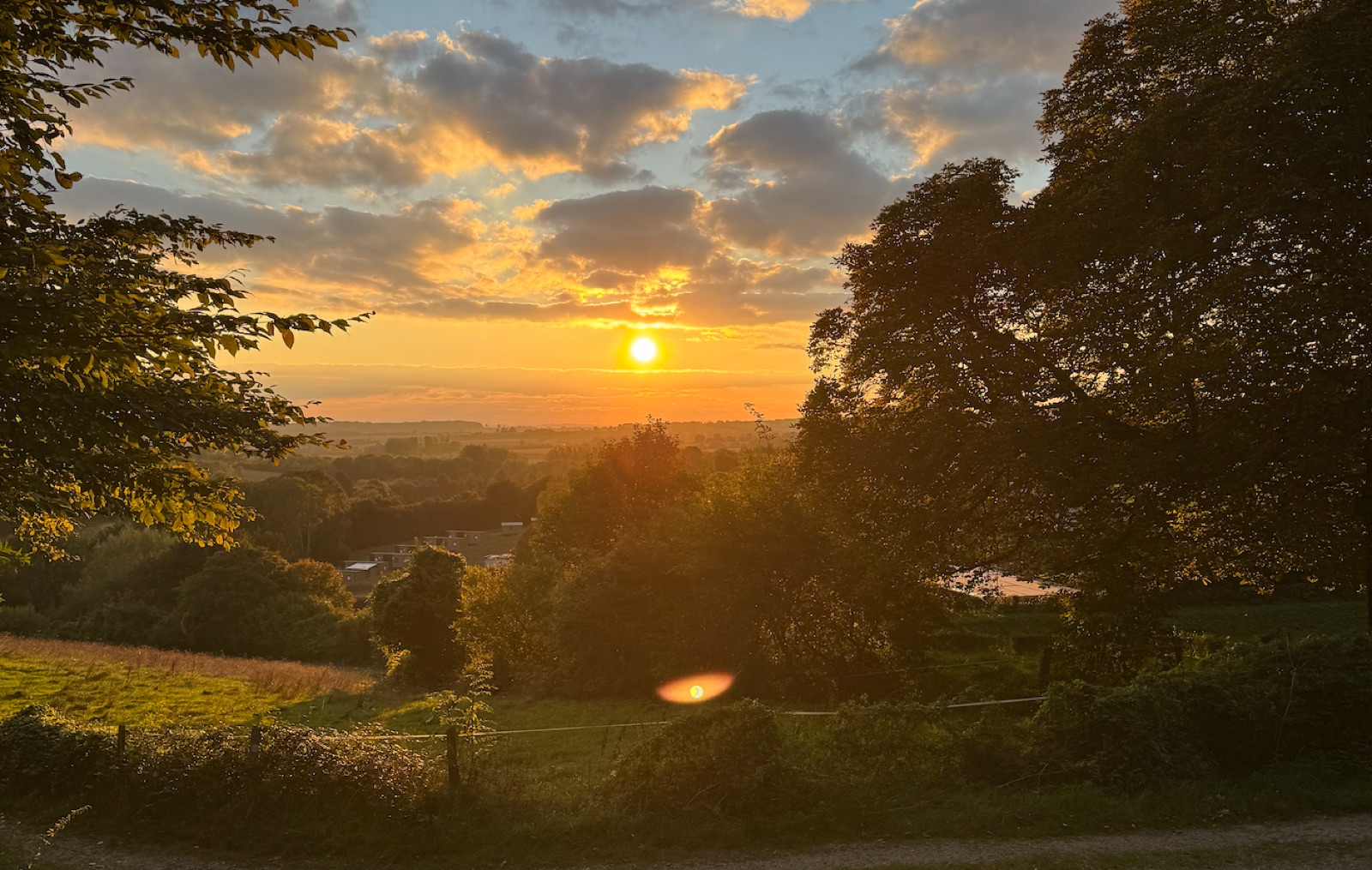
In October, the light through the canopy is the best it gets all year. The beech leaves turn copper and gold, the air smells of damp earth and decomposition, and the forest is doing exactly what it has done for centuries.
Bring a basket. You might get lucky.