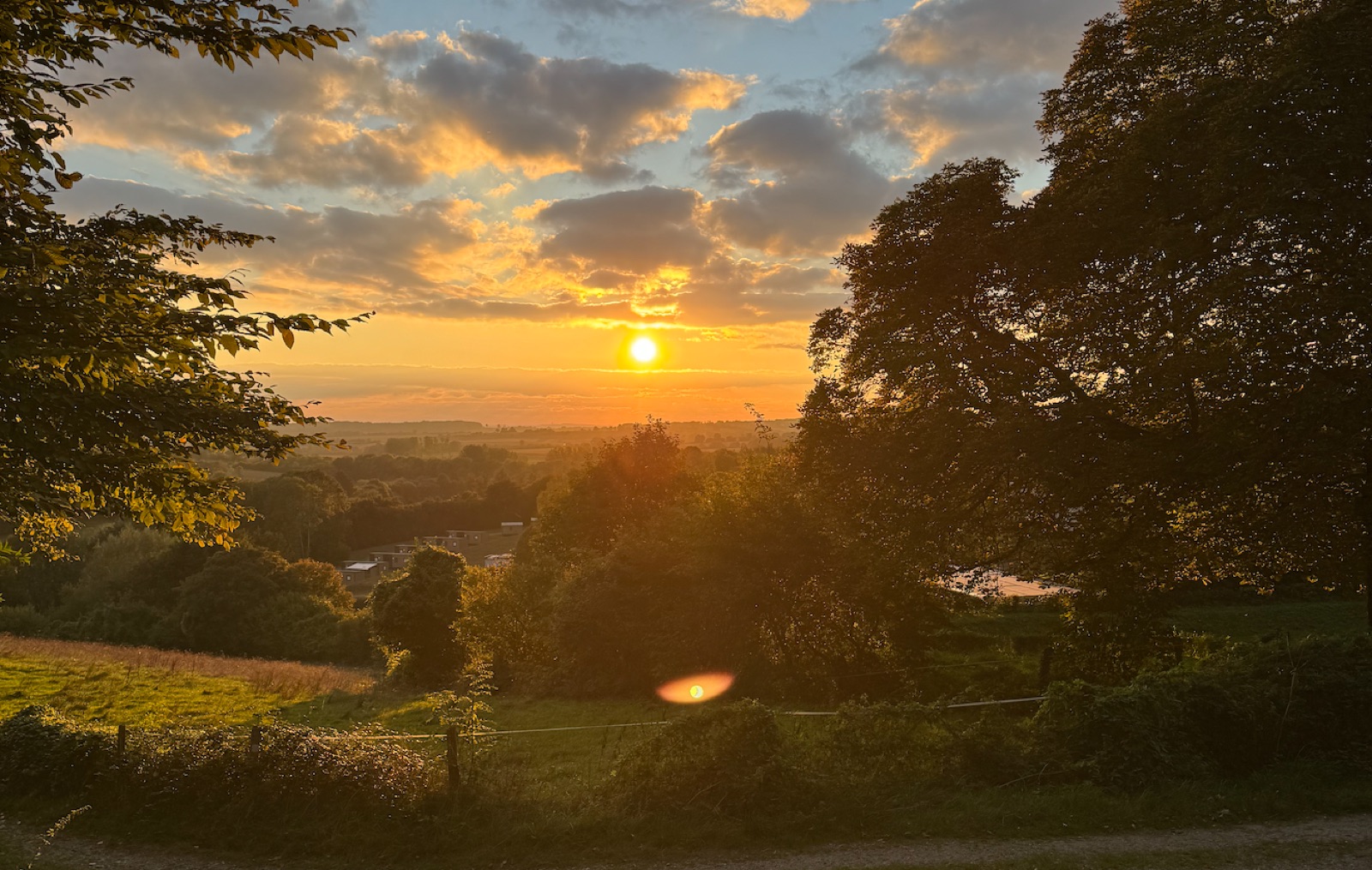
There is a particular quality of quiet in the Forêt de Bellême. The light filters green through centuries-old oaks, the path softens underfoot, and within minutes your shoulders drop without you noticing. The Perche has long known what science now confirms: time spent slowly, attentively, among trees is good for the body and the mind. The Japanese call it shinrin-yoku, forest bathing. Here we have our own word for the practice, sylvothérapie, and the forest has laid out a route to guide you through it.
It is called the Parcours Bien-Être, and it is wonderfully short: just 0.25 kilometres. Don't let the length fool you. This is not a hike you measure in distance but in attention. The whole point is to walk it slowly enough that 250 metres can fill an hour.
Five invitations
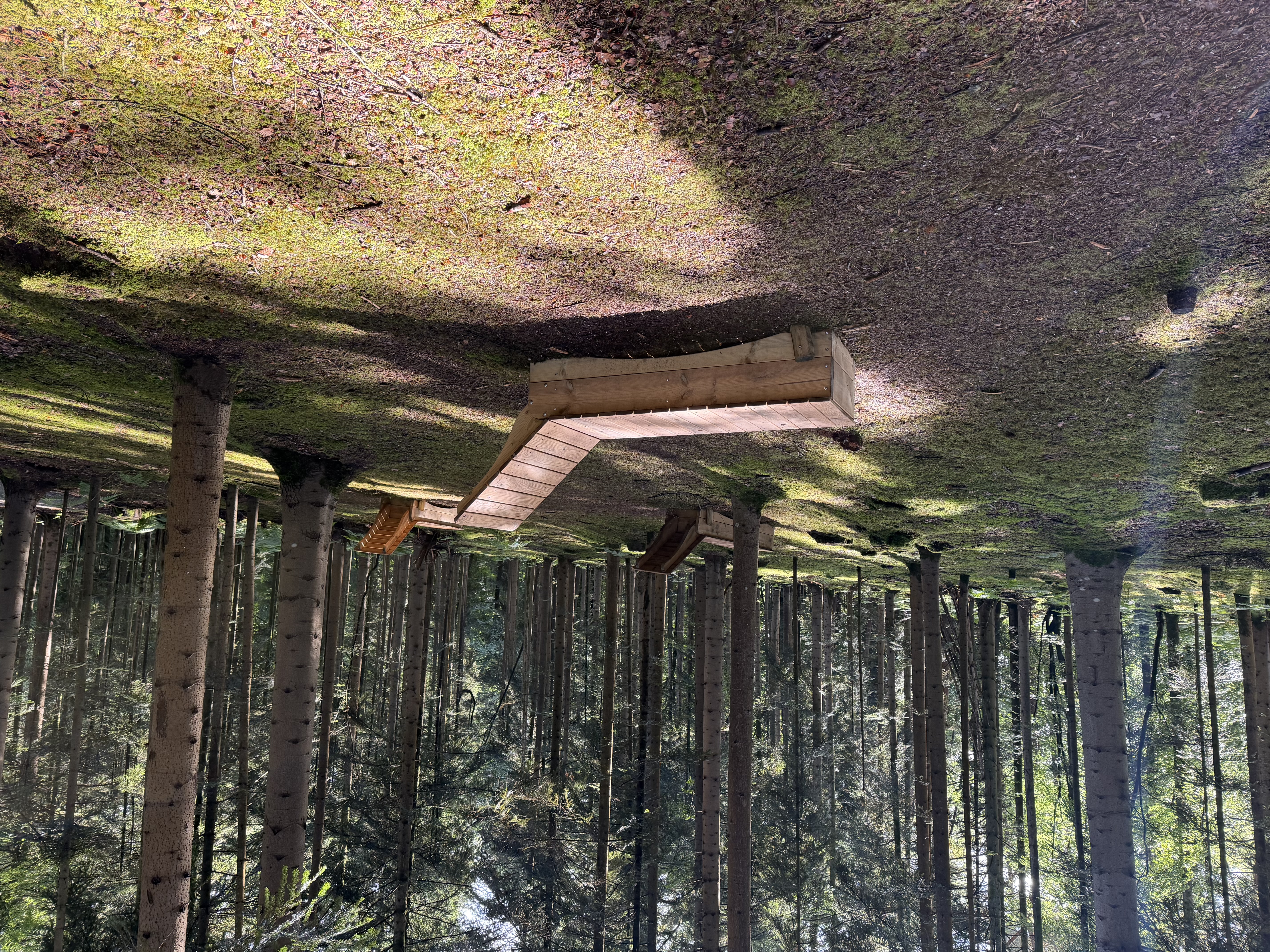
The route is organised around five simple prompts, each marked along the way. Take them in order, and give each one real time before moving on.
Écouter (Listen). Stop walking. Close your eyes if you feel comfortable. Count the separate sounds you can pick out: wind moving through the canopy, birdsong near and far, the creak of a branch, your own breath. Don't name them as good or bad. Just let the forest's soundscape arrive.
Marcher (Walk). Now move, but slower than feels natural. Halve your usual pace, then halve it again. Feel each footfall, the give of the soil, the shift of your weight. There is nowhere to arrive. Walking this slowly tells your nervous system that there is nothing to rush toward.
Observer (Observe). Soften your gaze rather than scanning for detail. Let the gradations of green wash over you. Then pick one small thing, the texture of bark, the architecture of a fern, the way light catches a leaf, and study it as if you'd never seen it before.
Ressentir (Feel). Reach out and touch. Press a palm flat against a trunk and notice its temperature and texture. Run your fingers through moss. This is the heart of sylvotherapy: making contact, letting the boundary between you and the forest soften.
Respirer (Breathe). Finish by breathing deeply through the nose. Forest air is rich in phytoncides, the aromatic compounds trees release, which are linked to lower stress and a calmer mind. Take ten slow breaths. Let the exhale be longer than the inhale. This is the part you carry home with you.
Before you begin
Turn off your phone. Not silent, off. The single most important rule of forest bathing is removing the thing that pulls your attention out of the woods. Slip it into a bag and leave it there for the duration of the parcours.
Let go of the clock. A quarter-kilometre might take you fifteen minutes or a full hour. The slower version is the better one.
Extending the practice
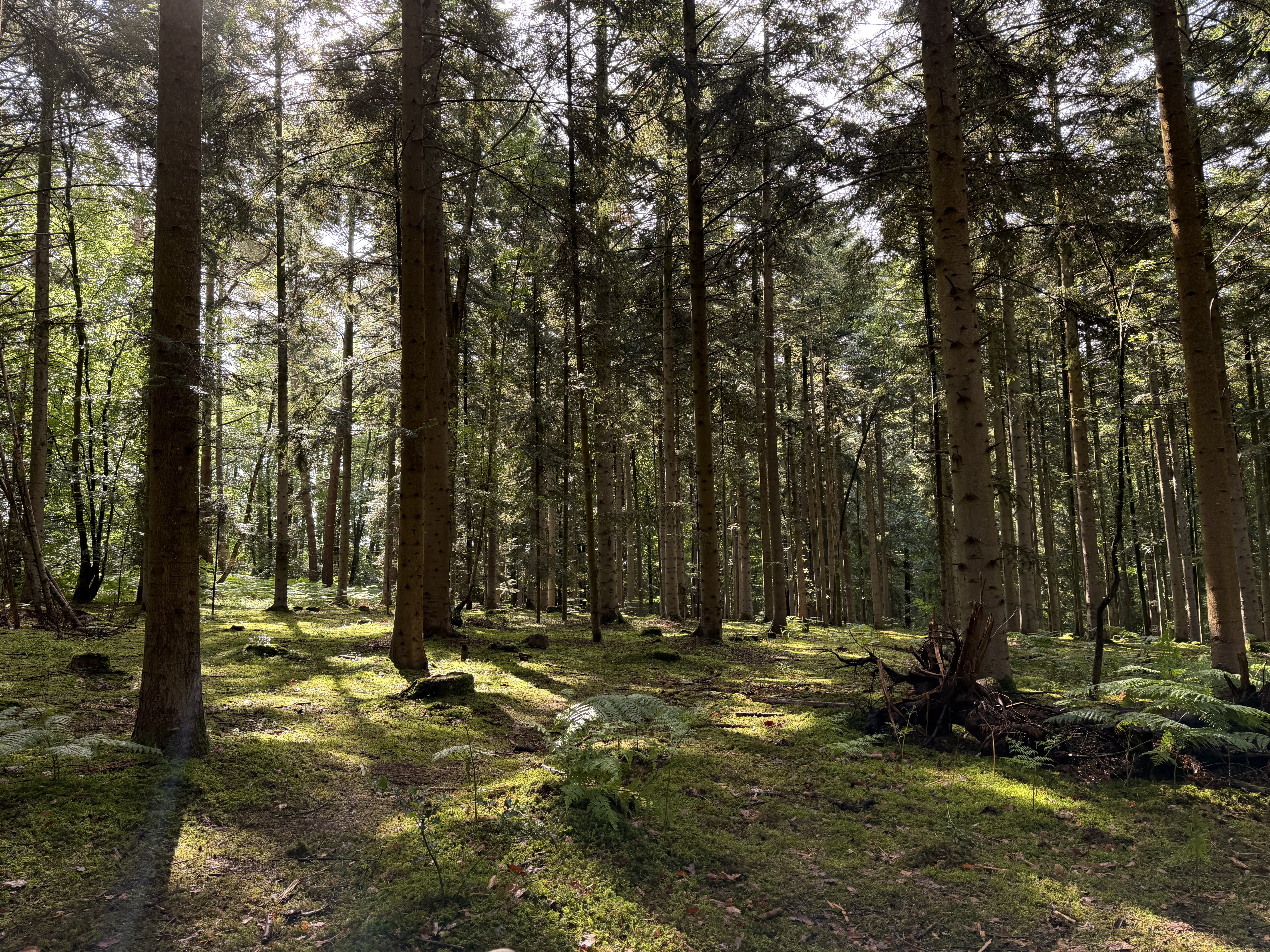
The Parcours Bien-Être is the perfect introduction, but the wider Forêt de Bellême rewards anyone who wants to stay longer. From the heart of Bellême, the Étang de la Herse loop runs about 10 kilometres past a pond laid out in 1780 and a restored 18th-century fountain long held to have medicinal springs. Nearby stands the Chêne de l'École, a Cécile oak born in 1666, more than four metres around and forty-two metres tall. Standing beneath a tree that has weathered three and a half centuries is its own kind of meditation.
How much is enough? Research cited by sylvotherapy practitioners suggests two to three hours in the forest benefits the body for about a week; a deeper two- or three-day immersion can carry forward for a month. But even one slow lap of the Parcours Bien-Être is a genuine reset, not a token gesture.
Practical notes
Wear sturdy shoes, as the forest floor can be muddy after rain. Bring water. Go midweek or early morning if you can, when the woods are emptiest and the silence is fullest. Spring and autumn are loveliest, but the route works in every season; winter has its own bare, clarifying stillness.
The forest asks nothing of you and gives a great deal in return. Listen, walk, observe, feel, breathe. Then let Bellême do the rest.